
Listen, I know writing about yourself isn’t the most pleasant experience. Buuut, have you ever landed on a website and realized the only place you can actually get to know the person behind the business is their About page?
So you click over, expecting a little context, and suddenly you’re reading their entire origin story, their go-to coffee order, their core values, their childhood dream job, their dog’s personality type, and why they started their business… All in one sitting. Wheww.
And listen, I say this with all the love because I used to write websites like this too! In fact, I wrote my therapy website just like this.
For a long time, the About page carried the entire emotional weight of the website. It was the place where your personality lived and the place where connection happened. This was usually the place where your reader was supposed to go, “Ohhh, okay. I trust you now.”
I hate to break it to you, buuut, not everyone is going to read your website in order
I mean, do you even read a website in order?!?
They might land on your services page first, your blog, contact page. Or that one oddly specific portfolio piece you forgot was still ranking on Google.
Which means if your About page is the only place your reader gets a sense of who you are, you’re making one page do a lot of heavy lifting.
At some point, I started noticing website templates including small about sections everywhere: on homepages, contact pages, blog pages, services pages, sales pages, even freebie opt-ins. And honestly as a neurodivergent reader, I felt two things immediately:
- More connected.
- And wayyyyy less overwhelmed.
Because instead of being handed someone’s entire life story in one giant scroll, I was getting small, relevant moments of connection right where I needed them. And that’s the beauty of a mini about section. A mini about section gives your reader a little context, a little trust, and a little “oh hey, I like this person” without asking them to detour through your whole digital autobiography.
So let’s talk about why we fuck with mini about sections, where to put them on your website, and how to write them in a way that actually supports the page instead of just repeating “I love coffee and helping people” until we all lose the will to live.
What Is a Mini About Me Section On A Website?
A mini about me section is exactly what it sounds like. It’s a small, strategic intro that gives readers (& Google!) enough context to understand who you are, why you do what you do, and why they should trust you on that specific page. They’re typically short, sweet, and to the point!
Where to Put a Mini About Section on Your Website
A mini about section is best placed where your reader might need some additional information about you. This is important to take note of because unfortunately, not all readers are going “in order” through your website pages like I mentioned earlier. e.g. home → about → services → portfolio → blog → contact. In fact, I would argue that your reader is RARELY doing so.
So, with that knowledge in itself, it’s important to make sure that your ideal reader does know who you are and mini about sections are the perfect opportunity for a mini introduction, if you will.
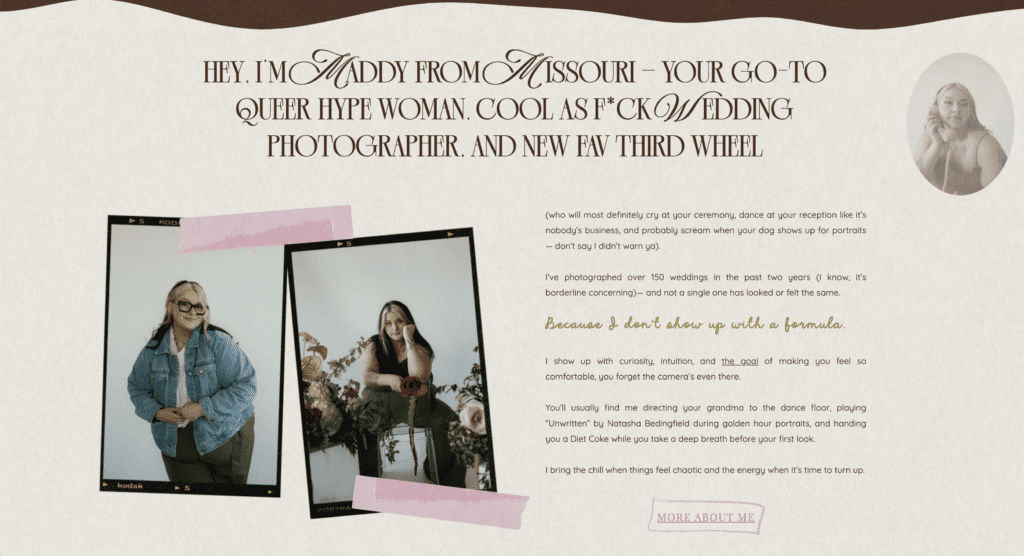
Homepage
Purpose: To introduce who you are, what you do, who you help, and why your reader should keep exploring.
Your homepage mini about section should give people just enough context to understand the human behind the business without pulling them away from the bigger journey of the page. Think of it as your warm little handshake before sending them deeper into your website.
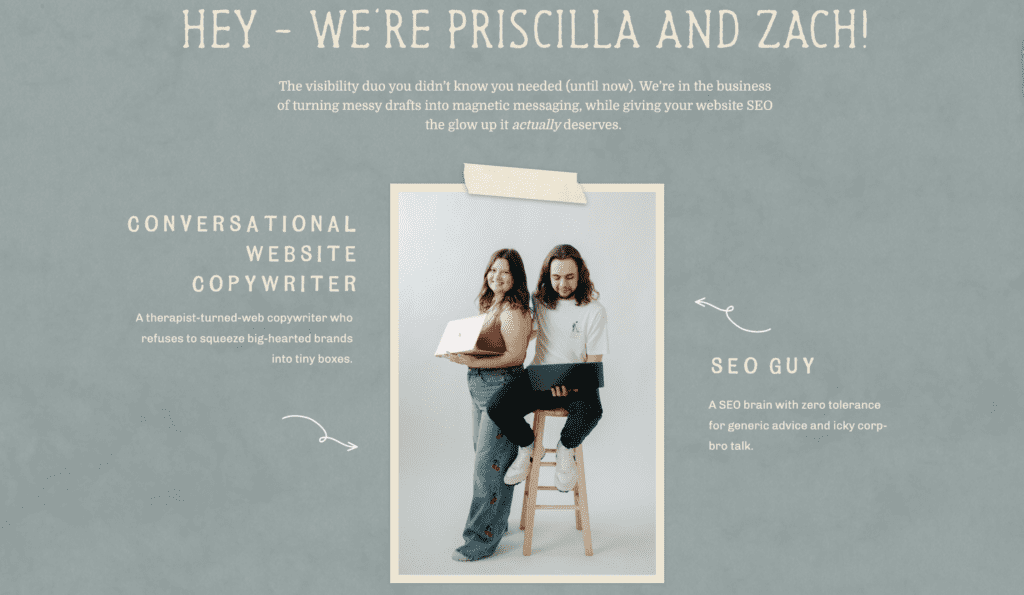
Homepage Team
Purpose: To introduce the people behind the brand and clarify how the team dynamic actually supports the client experience.
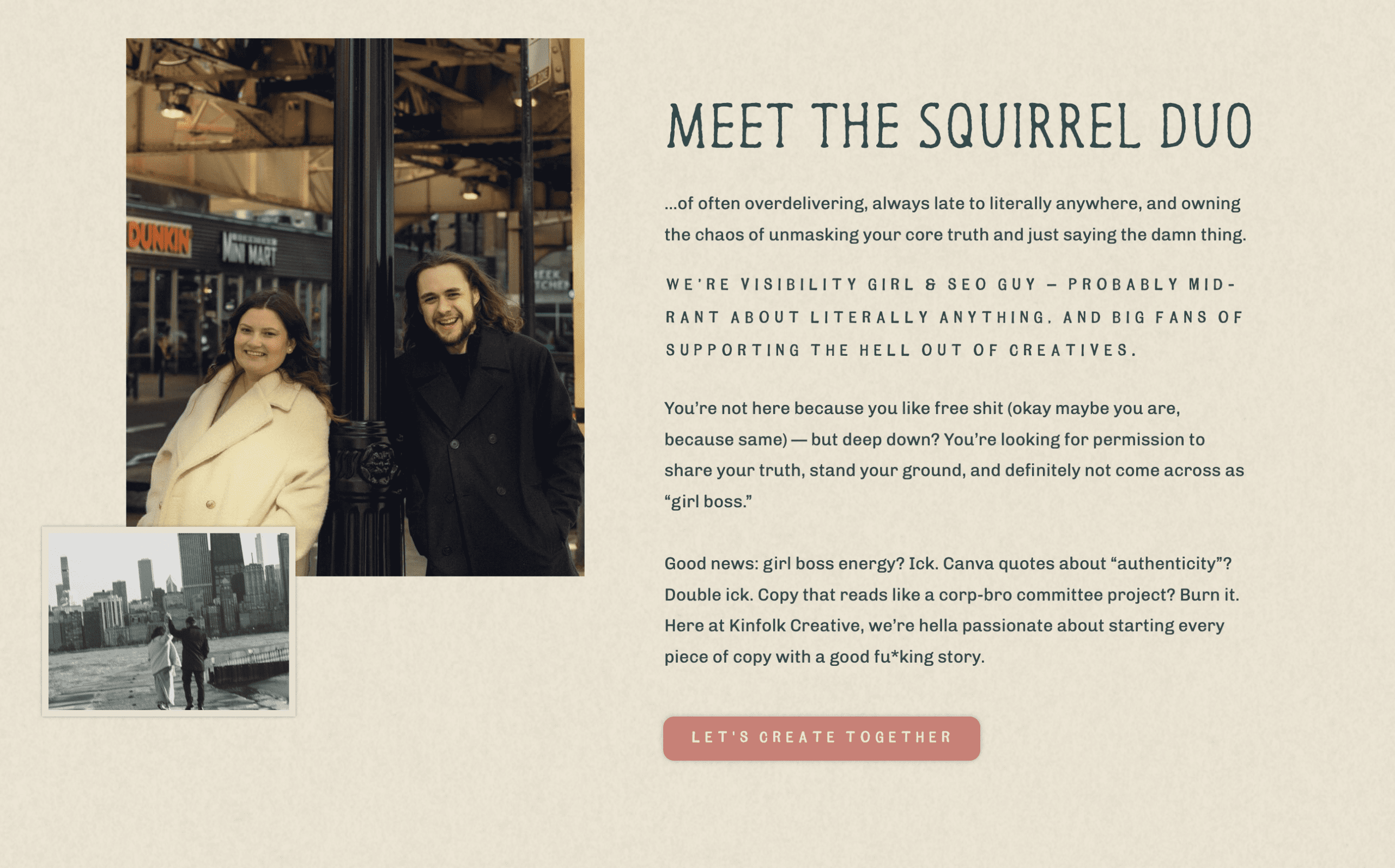
This is especially helpful for duos, teams, studios, or agencies because your reader may be wondering, “Who am I actually working with?” A team mini about section can make your business feel more personal, organized, and trustworthy without needing a full team directory moment (Save that for the actual about page!).
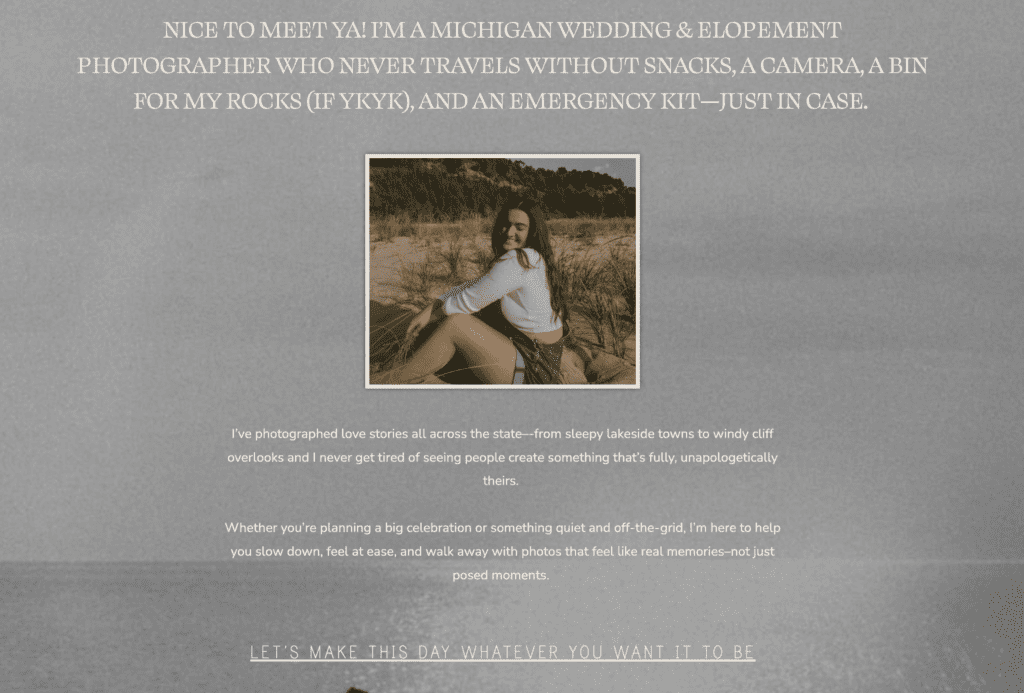
Sales Page
Purpose: To build trust right before someone makes a buying decision.
By the time someone reaches your sales page, they’re usually weighing whether your offer is actually the right fit for them. A mini about section here can connect your expertise, experience, and point of view directly back to the transformation you’re selling. You do mainly BUY from the person vs. the actual offer afterall.
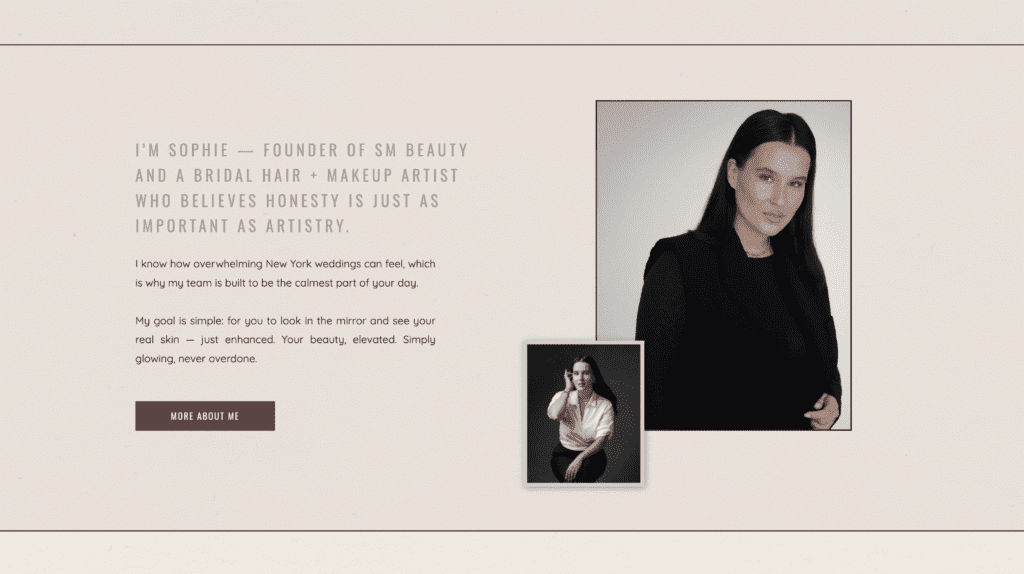
Contact Page
Purpose: To reassure people right before they inquire.
Your contact page is often where nerves spike because the reader is moving from “just browsing” to “okay, I might actually do this.” I mean, you are asking for a whole heck of vulnerability here. A mini about section can make that next step feel less intimidating by reminding them there’s a real, approachable human on the other side of the form awaiting to do some giddy cartwheels when they see that “new inquiry email”.
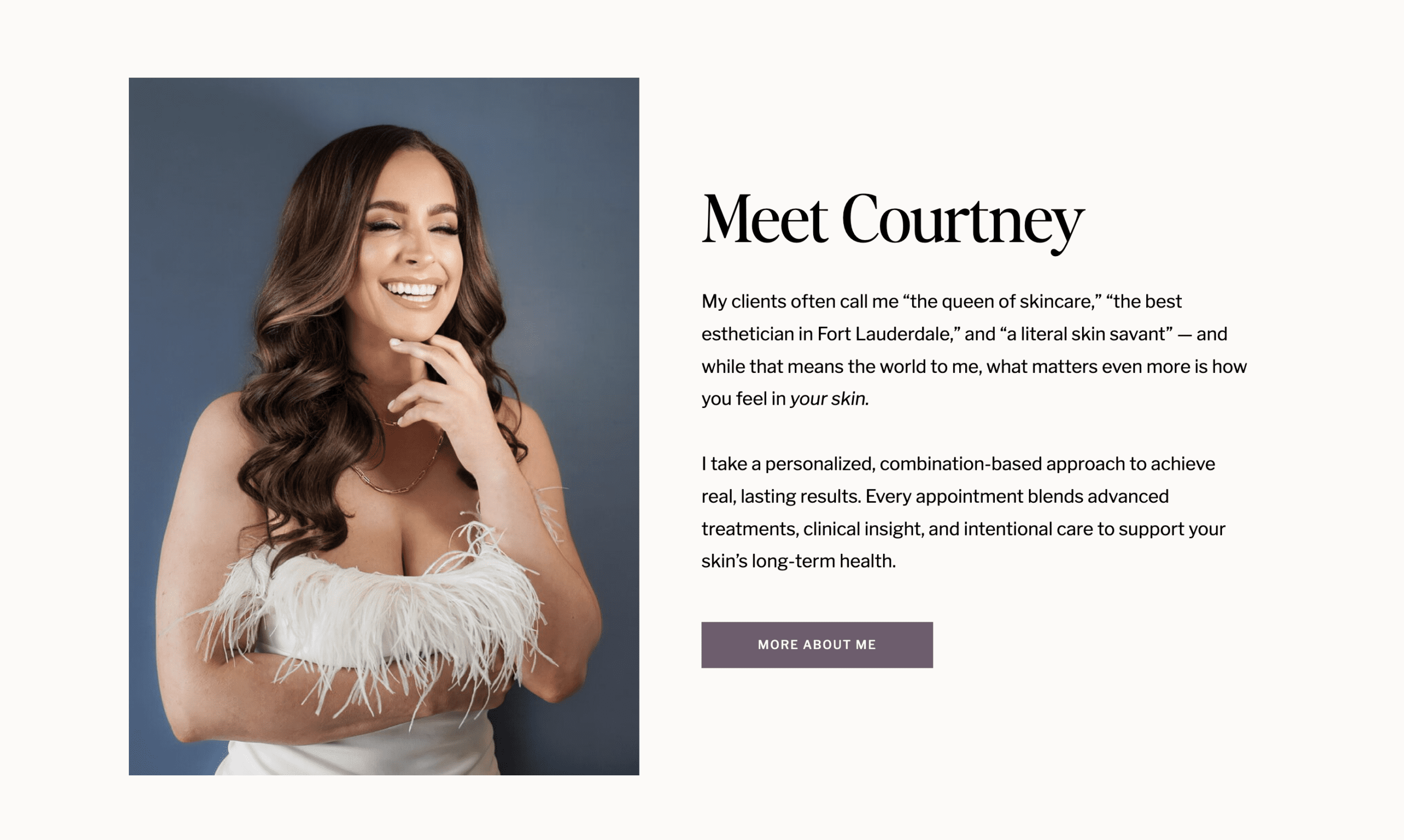
Services Page
Purpose: To connect your personality, process, and expertise to the service you’re offering.
A services page mini about section helps your reader understand why you’re the person to guide them through this specific offer, not just what the offer includes. This is where you can make your experience feel relevant instead of randomly dropping your bio into the middle of the page.
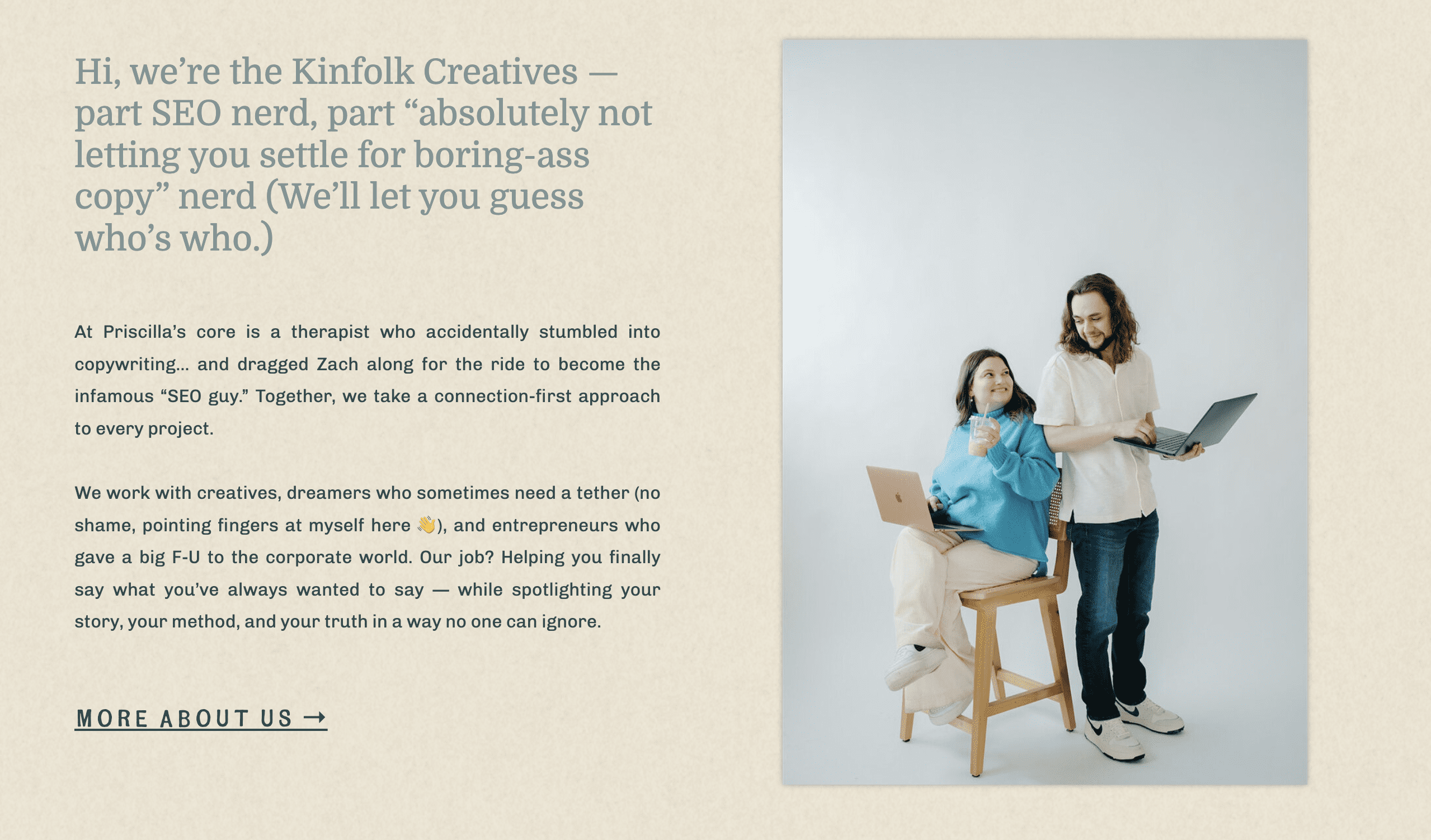
Portfolio Page
Purpose: To give context around your work, process, and creative perspective before someone judges the visuals alone.
Your portfolio should show the work, obviously, but a mini about section can help explain what someone is actually looking at. It can give your reader a better understanding of your role, your strategy, your creative choices, or the kind of client experience behind the final result.
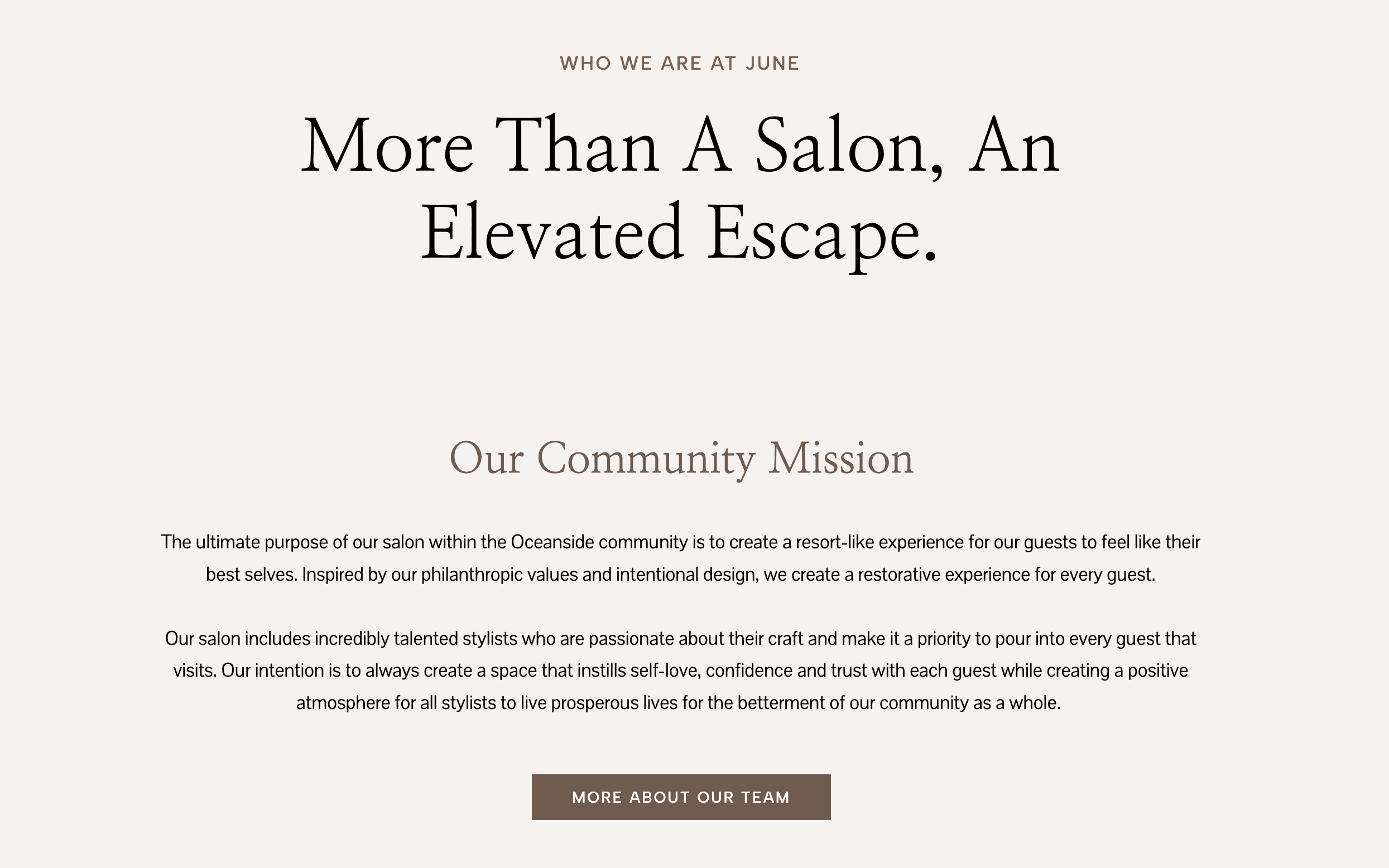
Careers Page
Purpose: To help potential applicants understand the culture, values, and humans behind the brand.
A careers page mini about section is less about “here’s my whole story” and more about “here’s what it actually feels like to work with us.” It can help attract people who align with your standards, communication style, and overall way of doing business.
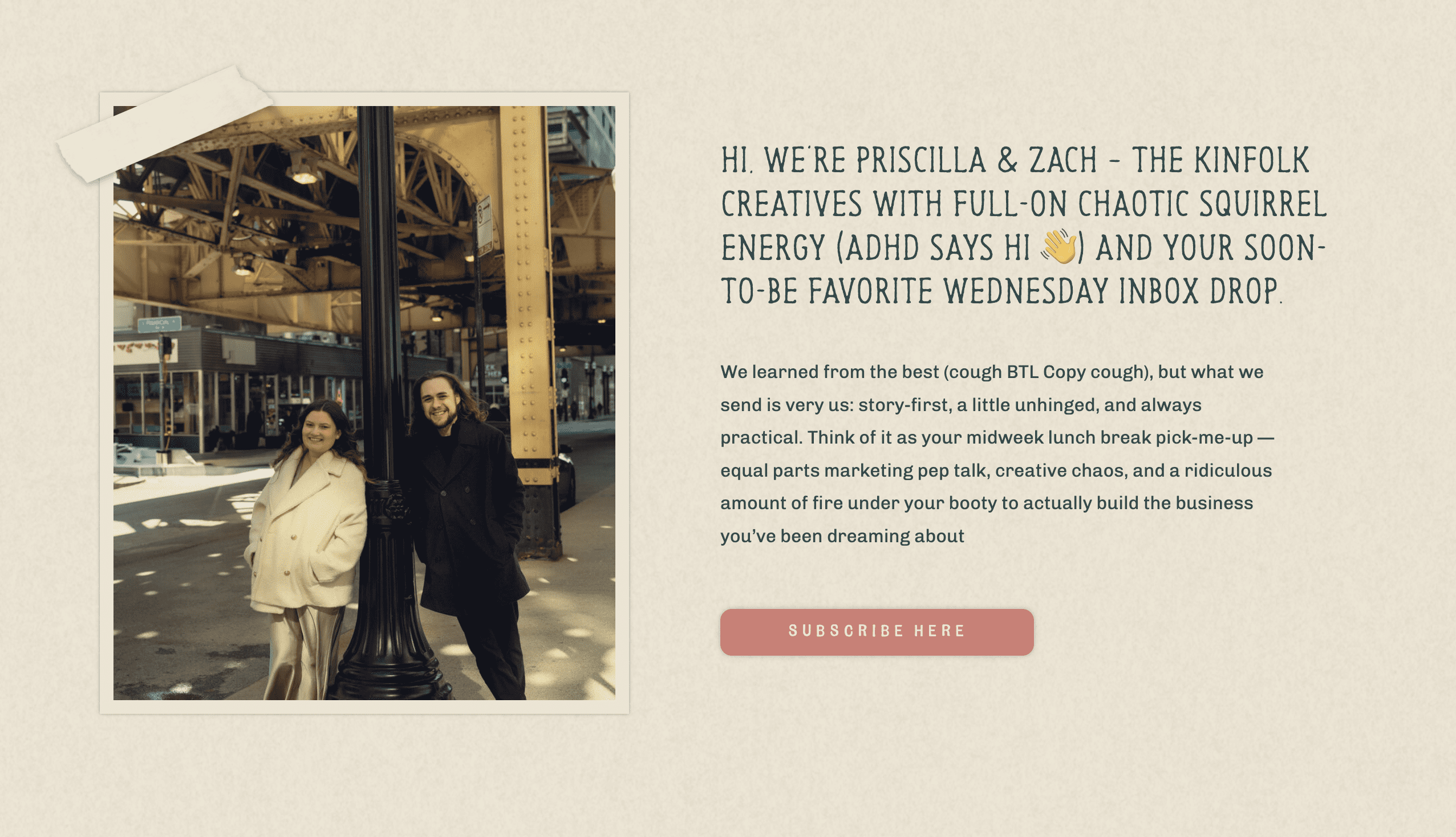
Newsletter Opt-In
Purpose: To tell people why they should trust you in their inbox.
Handing over an email address is still a tiny act of trust, especially when inboxes are already feral. A mini about section can quickly explain who you are, what kind of value you send, and why your emails won’t feel like spammy bs.
Freebies
Purpose: To connect the free resource back to your expertise and give people a reason to actually download it.
A freebie opt-in mini about section can show the reader why you’re qualified to teach, guide, or support them through the thing they’re about to receive. It also helps the freebie feel less like a random PDF floating in the void and more like a first step into your larger ecosystem. I love including mini about’s here because most of the time your reader is visiting from a direct link to the freebie.
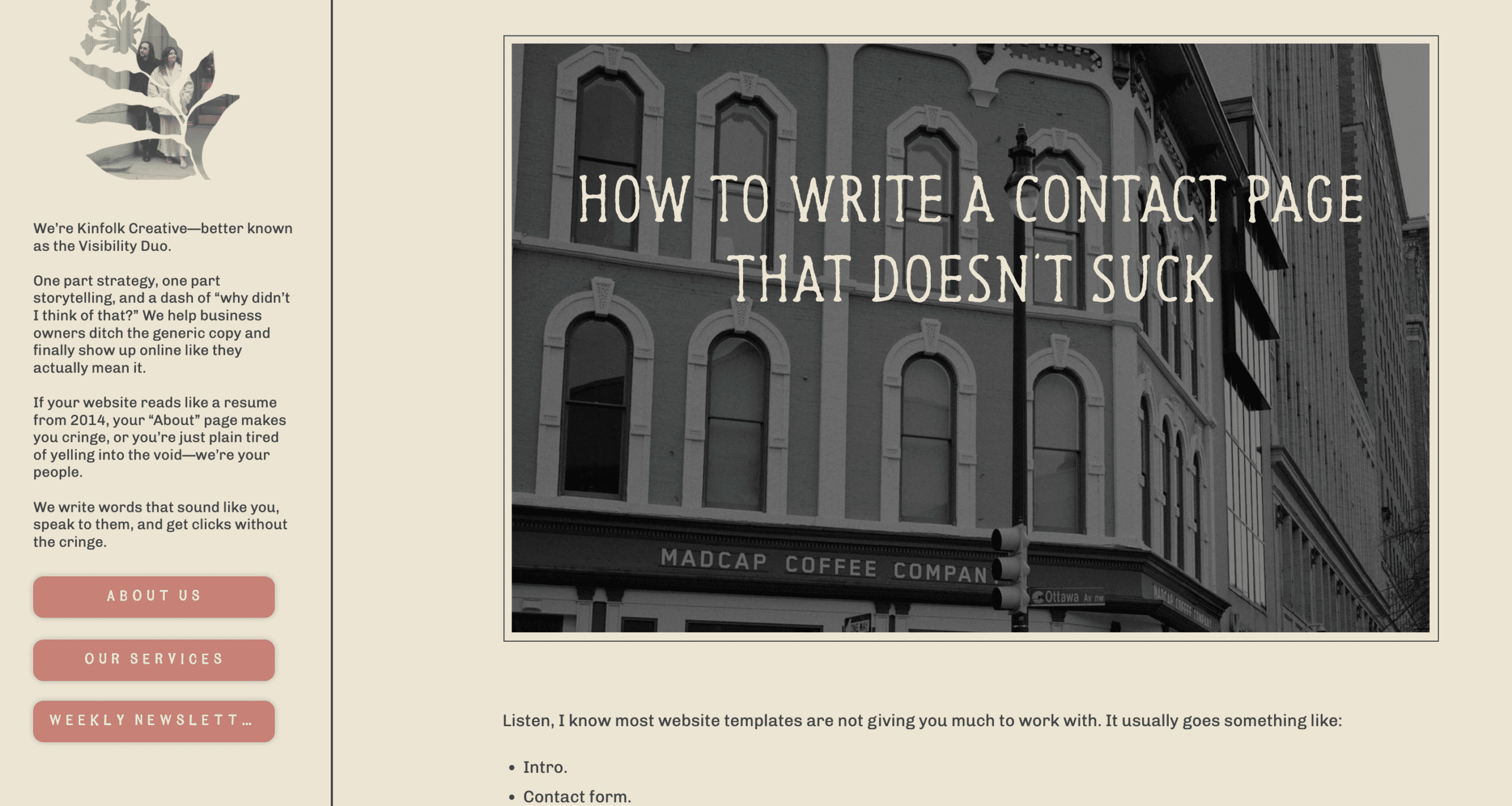
The Blog
Purpose: To remind new readers who you are, what you do, and why your advice is worth listening to.
People often land on blog posts from Google, Pinterest, or some link they forgot they clicked three tabs ago. A mini about section helps orient them quickly so they understand the perspective behind the post and know where to go next if they want more from you.
Basically… Your Website Should Let People Get to Know You in Layers
If you want a website that builds trust without dumping your entire personality onto one page our website copywriting services are built for that exact kind of strategic, human-first storytelling.
P.S. Wanting to learn how to write a killer About Page without cringing writing about yourself? Head to this blog next!
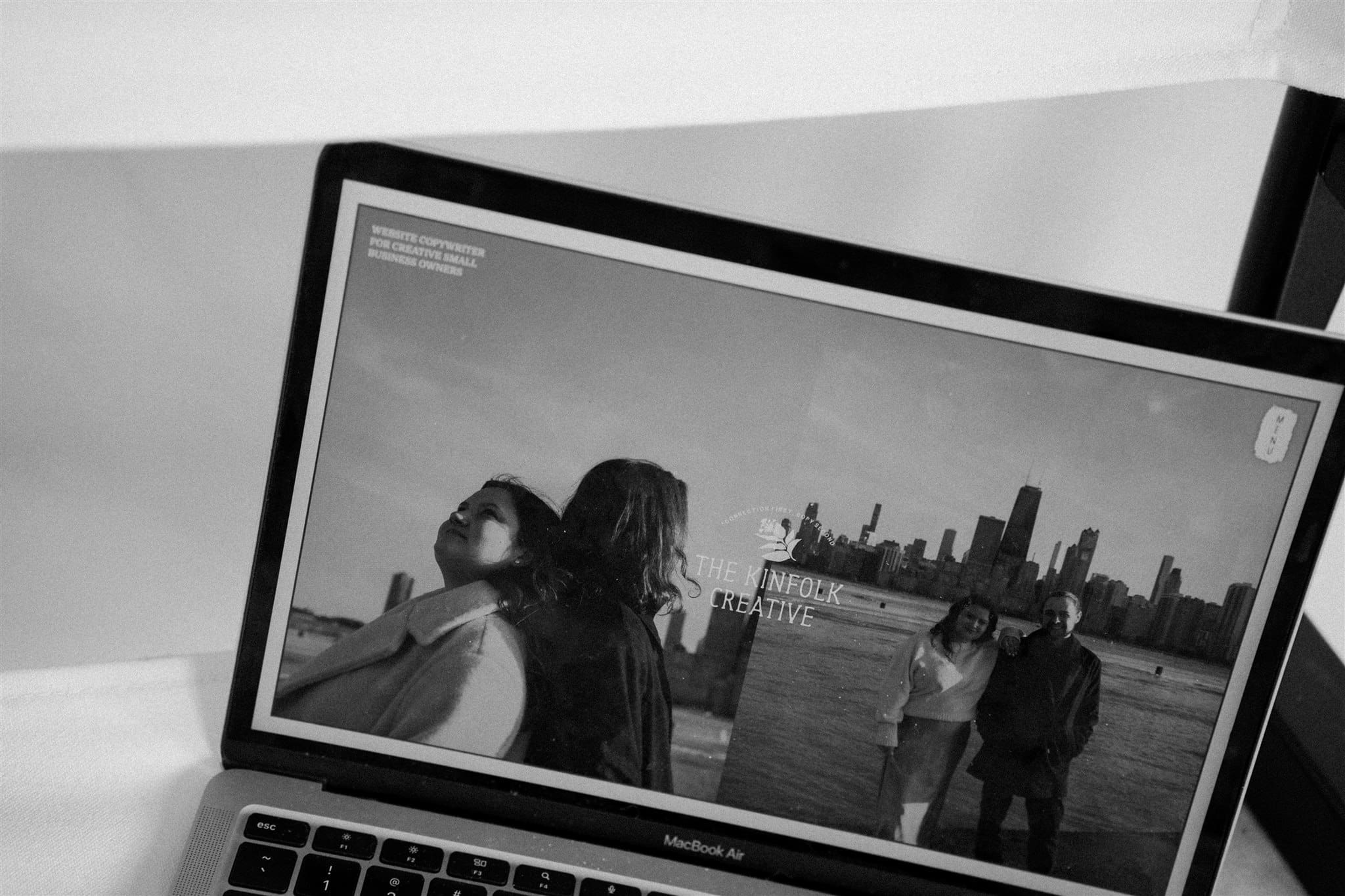
Your About Page Shouldn’t Be Doing All The Heavy Lifting

We’re Kinfolk Creative—better known as the Visibility Duo.
One part strategy, one part storytelling, and a dash of “why didn’t I think of that?” We help business owners ditch the generic copy and finally show up online like they actually mean it.
If your website reads like a resume from 2014, your “About” page makes you cringe, or you’re just plain tired of yelling into the void—we’re your people.
We write words that sound like you, speak to them, and get clicks without the cringe.


